Because “good fences” come in many forms—some leafy, some solid, and some completely custom.
1. Evergreen Hedges & Living “Walls”
What they are: Dense rows of shrubs or small trees (think Photinia, Glossy Leaf Privet or Junipers) clipped or allowed to grow informally.
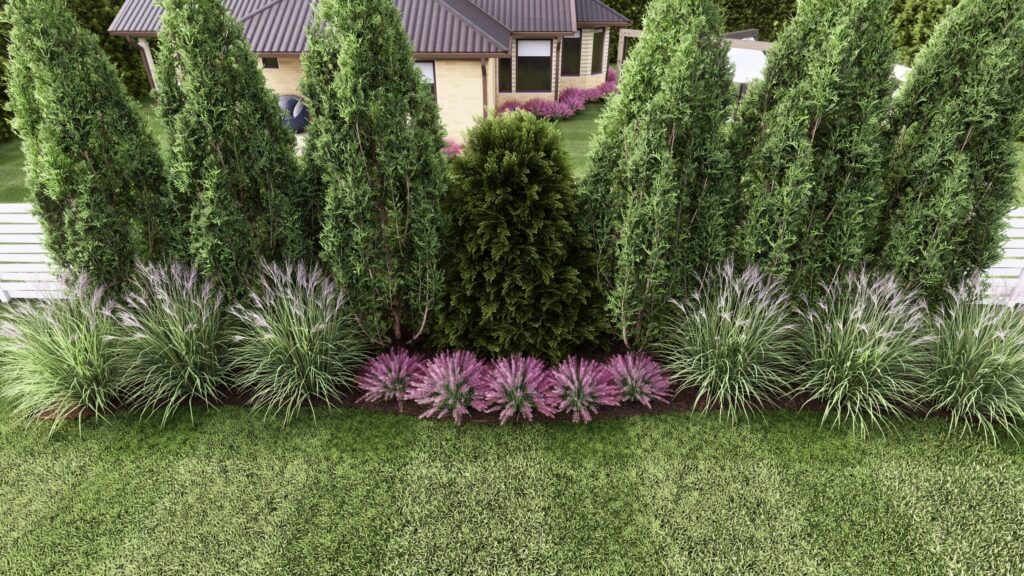
| Pros | Cons |
|---|---|
| • Soft, green year‑round screen • Excellent sound absorption • Supports birds & pollinators | • Require 18–36″ planting width • 2–3 years to reach full density • Ongoing pruning and irrigation |
To screen a two-story building, think Arizona Cypress, Green Giant Arborvitae, or Austrian Pine as a privacy solution.
2. Privacy Fences & Walls
What they are: Solid opaque screens using wood, composite, masonry, metal, or stucco.
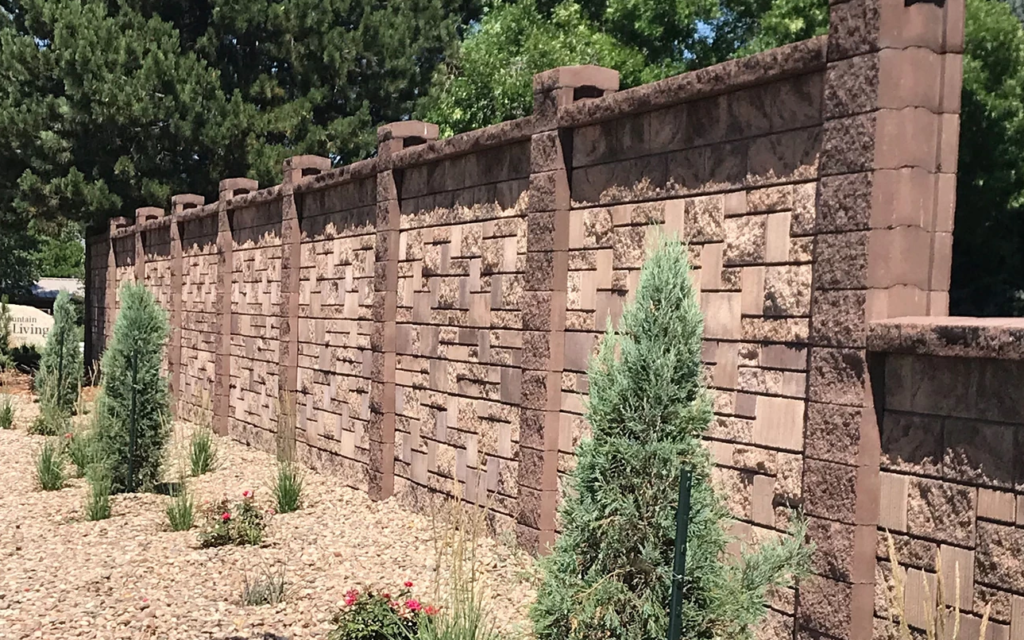
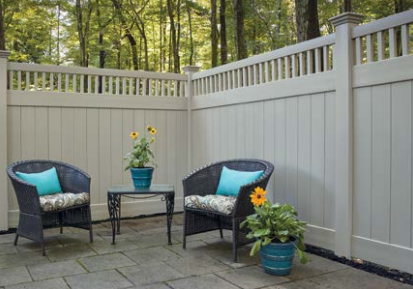
| Pros | Cons |
|---|---|
| • Instant, total visual block • Low maintenance (especially masonry) • Doubles as security perimeter and animal barrier | • Highest upfront cost • May feel imposing without offsets or plant softening • Subject to height limits, typically 6 feet along sides and backyard |
3. Louvered or Laser‑Cut Metal Panels
What they are: Powder‑coated aluminum, metal or Corten steel screens with custom patterns that filter light while obscuring views. Think of 4 x 6 panels that can be free-standing or grouped to form a longer, more comprehensive privacy solution.
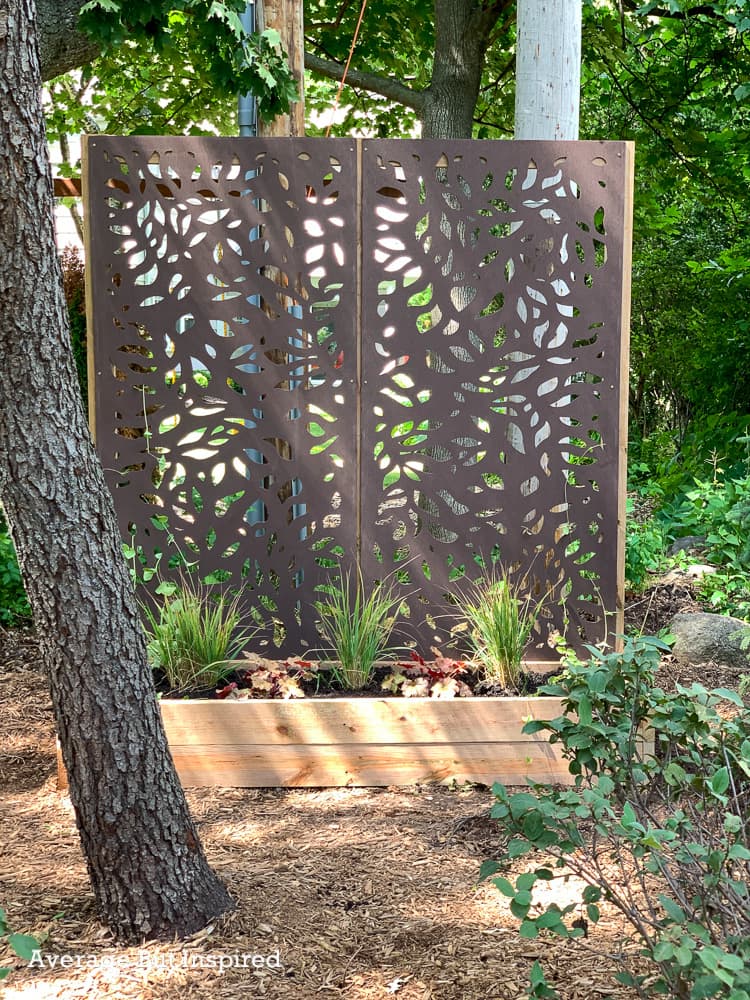
| Pros | Cons |
|---|---|
| • Artistic statement piece • Durable in harsh sun • Lets breezes through (great for spas or patios) • Can be free-standing and moved around if needed • Can be bolted to concrete surfaces as well as embedded into footings in the soil. | • Costs vary by design complexity • Requires structural footings in windy zones • Not 100% opaque • Limited color options |
Customization ideas: Can be hung from the eaves of a patio cover, gazebo, or pergola to screen objects that are higher up compared to ground-level objects. Because they are modular, they can be staggered or offset to break up a long, continuous line.
4. Trellises, Lattice & Green Screens
What they are: Fencing that consists of welded wire mesh or lattice, typically made of material that forms a diagonal pattern with small openings (commonly used below the edge of raised decks). Green screens are shade cloth or other faux-leaf panels that require attachment to a fence for support.
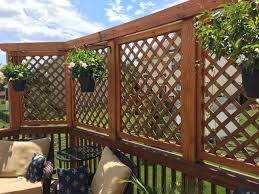
| Pros | Cons |
|---|---|
| • Rapid seasonal coverage if covered with vines or shrubbery • Relatively inexpensive option • Can be cut to fit quite easily | • Generally not aesthetically the best looking way to screen something • May be restricted in certain HOAs due to the association with the “trailer park” look. |
5. Moveable Planter Walls
What they are: Modular steel or fiberglass troughs on hidden casters, planted densely with grasses or succulents.
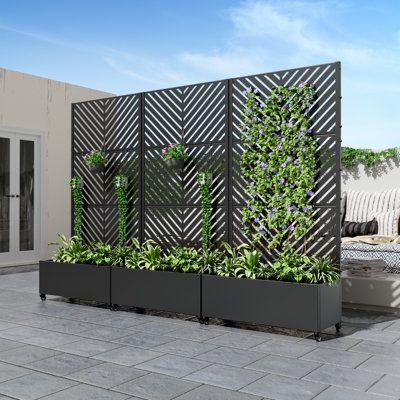
| Pros | Cons |
|---|---|
| • Instant, flexible screen • Can re‑configure for parties • Adds greenery to hardscape‑heavy yards | • Not ideal on sloped surfaces • Plants need root space—choose 24″ depth minimum |
Pulling It All Together
Most successful privacy strategies layer two or more solutions—for example, a 6-foot block wall or a wood fence covered with self-clinging vines or a vine-covered steel trellis, with staggered agaves in front. This “green + structure” combo breaks up the scale, satisfies height limits, and still screens the neighbor’s deck.
Key decision filters for clients:
- Speed vs. Budget – Built walls provide instant results; living screens are more cost-effective but require time.
- Maintenance Appetite – Evergreen hedges need pruning; masonry walls barely a rinse.
- Microclimate Needs – Solid walls reflect heat; layered planting cools via evapotranspiration.
- Consider Your Home’s Architectural Style – Contemporary laser‑cut Corten steel versus rustic stacked stone —match your home’s architecture.
- Regulations – Always verify local height limits, setback rules, and firewise clearances.
Final Thought
True privacy feels effortless when the privacy solution appears seamless and unobtrusive. Whether you choose whispering desert willow, a sculptural Corten screen, or a hybrid of both, the magic lies in tailoring the strategy to your exact views, light angles, and the way you live outdoors. Need help weaving the options into a cohesive, code‑compliant plan? A landscape designer can translate the possibilities into drawings, permits, and plant palettes—so your private retreat becomes a reality.