My Approach
Design is a process that involves space, elements, aesthetics, function and people among other things. But in the end, what is perceived is the way a space looks and feels. The relationship between designer and client must be established in terms of expectations and communication. Certain clients are very hands off in the design process, preferring to allow the designer free reign with creativity. Other clients have very specific criteria and are very involved in the design development process.
My approach to design is very client oriented as I avoid imposing my personal preferences into the process. Although I can take credit for the design, it is still the client’s property and the fulfillment of their needs, desires and goals.
I enjoy working with my clients in a manner that educates and informs them about how I formulated a design concept. This is a way for clients to appreciate the deeper meaning behind the concepts and images placed on paper.
Influences
During my graduate studies in Landscape Architecture at California Polytechic University Pomona, we were given coursework that included traditional design and construction but also an emphasis on what they called ‘ecosystematic landscape design’. This term was later changed to ‘sustainable landscape architecture’ and is now what the school of Landscape Architecture is now called, ‘The John Lyle Center for Sustainable Studies’ – and who was the chairman of my thesis committee.
Do I Have a Style?
I am very aware of the risk of imposing my personal preferences on a client who may have different style preferences. Design is a complex process where style is only a part. But from an individual standpoint, I was influenced by my parents’ adoration of Asian art and a graduate course called Geomancy, where we studied the hidden aspects behind Chinese and Japanese Gardens. Thus, the concepts of symbolism, reverence for nature, Yin-Yang balance, and the subordination of ornamentation have influenced my personal tastes. But I do not default back to an Asian style with every client. I honor each individual’s tastes and preferences and strive to provide the best design with which they would resonate.
From a more practical and universal standpoint, I do attempt to blend stone, water, fire, plants, and sculptural elements into designs that evoke a sense of serenity, liveliness, and beauty. Balance is the key to good design, but other design principles are essential as well, including line, form, texture, and scale. This approach blends well with any style or theme.
My deeper interest in gardens, nature, and design allows me to sense the designer’s inner meanings and design intent rather than the garden’s appearance. These subtler messages can be imbued into certain gardens where appropriate. For clients who want a more spiritually focused design or space, such as a meditation garden, labyrinth, or healing garden, a true meeting of the minds between designer and client would be at hand, making the design process more of an experience than a linear progression of events.
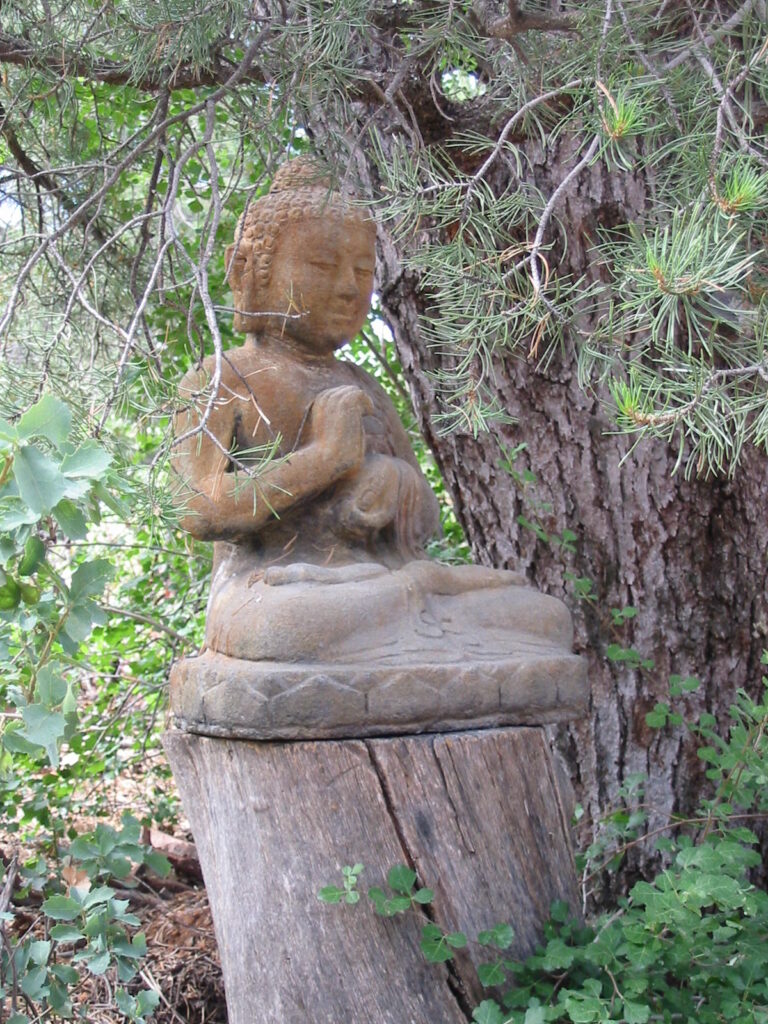
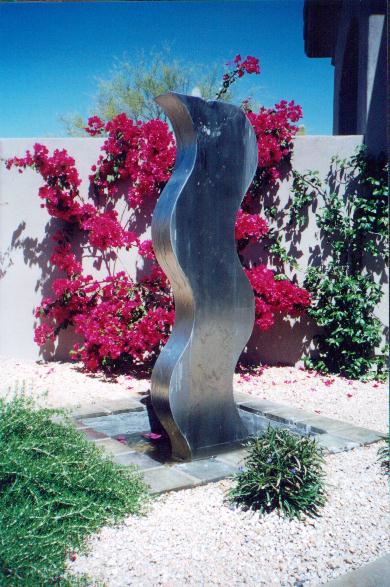
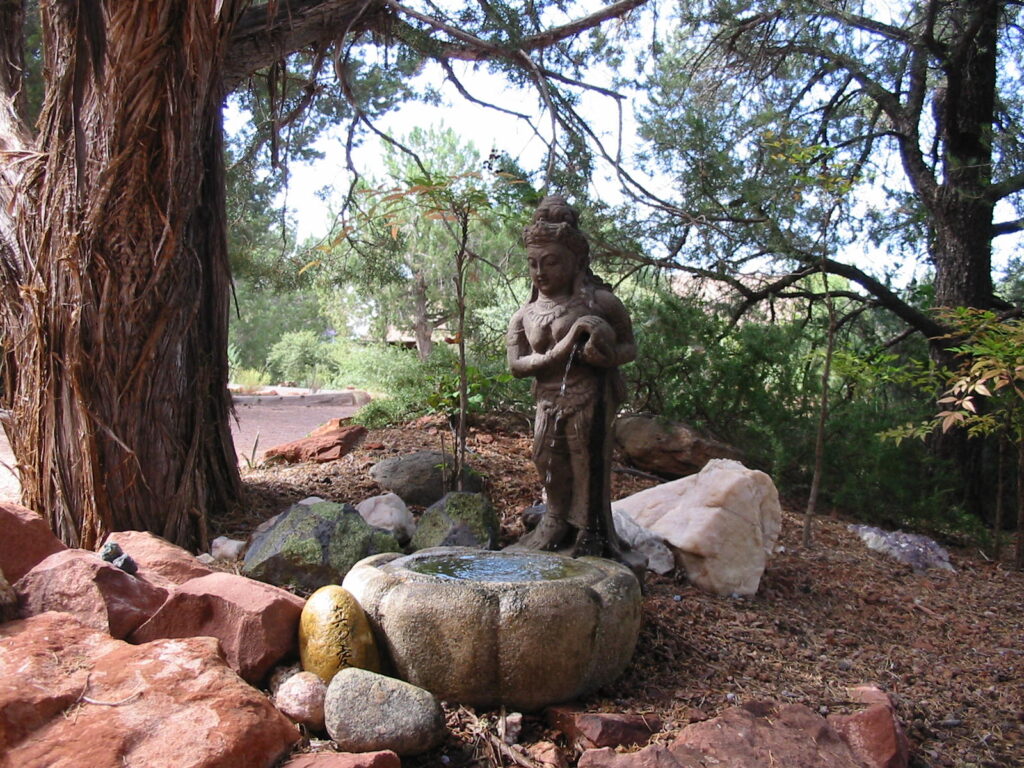
My ultimate dream is to design a serene, estate-style Japanese garden—an immersive landscape where winding stone paths, sculpted pines, and mirror-still water features create a sanctuary of balance and beauty. I envision standing proudly within such a garden, showcasing the harmony between nature, artistry, and intention. Every project I take on is inspired by this vision, and I strive to bring a touch of that peaceful, timeless atmosphere to each space I design.
