In Sedona’s striking high desert landscape, an increasing number of homeowners express an interest in creating gardens that feel “natural,” “native,” or “low-water.” While these goals are admirable, they often come with some misconceptions. As a landscape designer specializing in the Sedona area, I’d like to address some common misconceptions about native plants and provide guidance on designing with a native-inspired palette.
Native Doesn’t Mean No Water
A common misconception is that designing a landscape with native plants eliminates the need for an irrigation system. The truth is, all plants require at least an initial period of irrigation until they become established. At that point, you can adjust the irrigation system to operate at a reduced frequency or at low levels. While it’s true that many of our local species are drought-tolerant, they still require a certain amount of water that is received from rain. In nature, these plants often go dormant during dry periods, grow sparsely, or even die back partially in tough years. If we want our home gardens to remain vibrant, lush, and welcoming, even native and drought-tolerant species will need supplemental water, especially during extended dry spells.
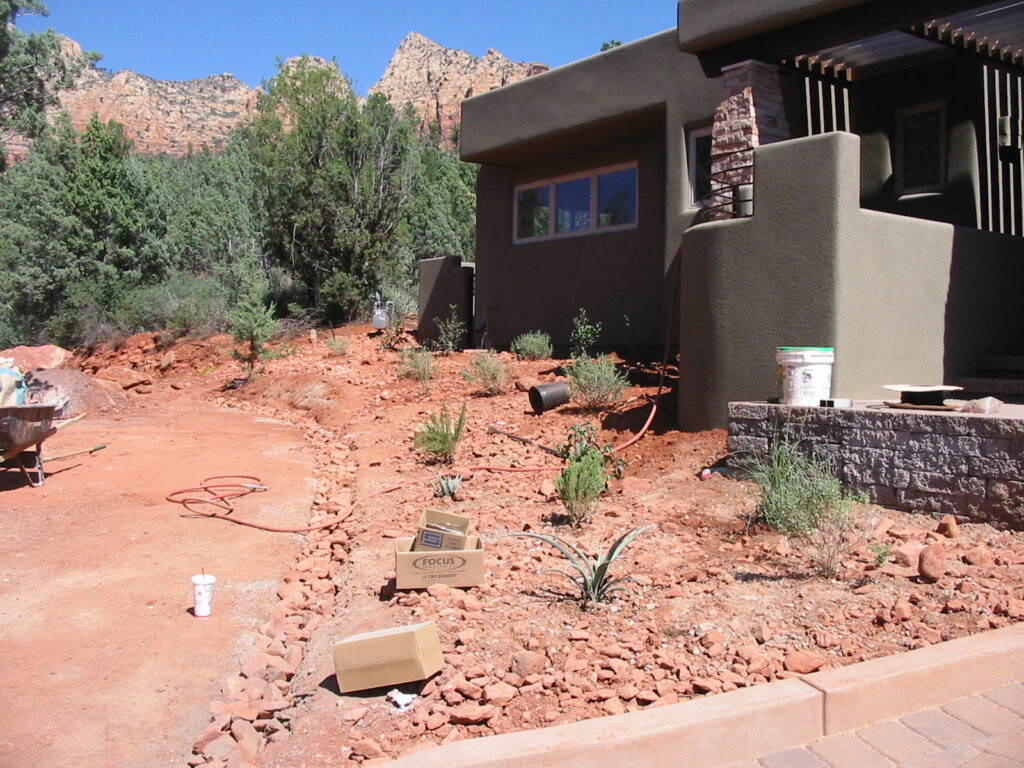
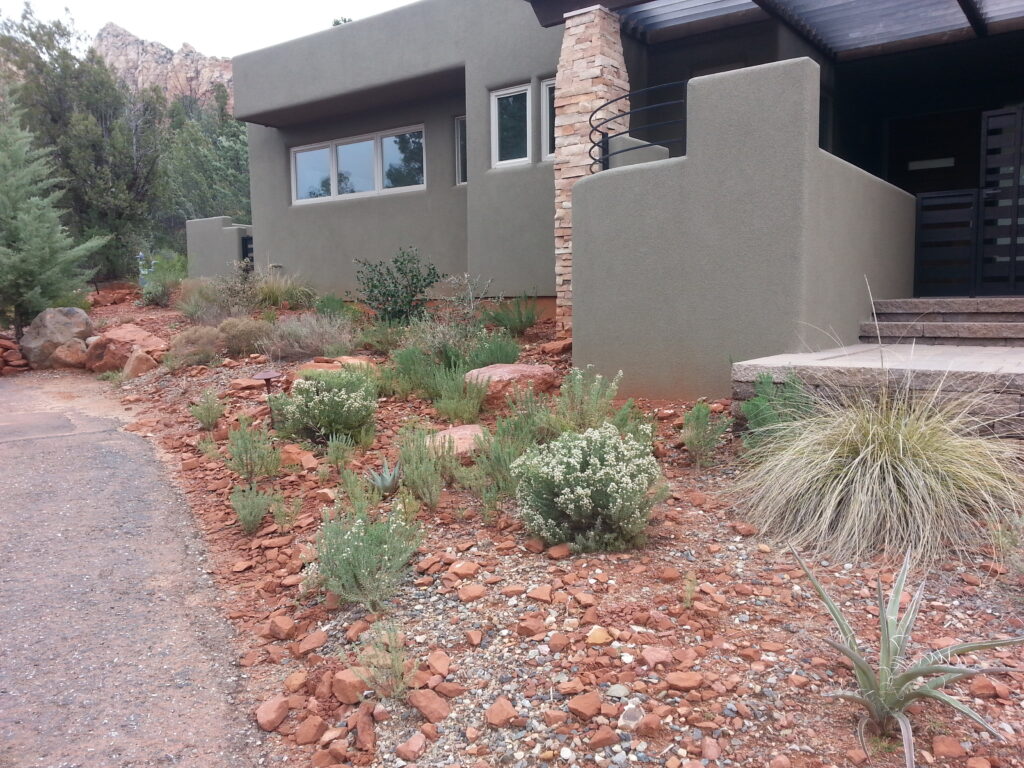
The Term “Native Landscaping” is overused in the Media
Due to concerns about water shortages and the need for water conservation, many government agencies promote the benefits of native plants. It’s a buzzword that really means low-water-use landscapes, as the focus is on water consumption rather than landscape aesthetics, where design considerations are also taken into account.
You may recall the term “xeriscape,” which was coined back in the 1980s. It also focused on designing landscapes that had low water usage. However, the term lost its popularity because many people did not understand what it meant unless it was explained.
- Native species – Plants that originated and evolved naturally in a specific region, like those found in Sedona’s surrounding forests and canyons.
- Indigenous species – A broader term often used interchangeably with native but can also imply plants native to a wider area or ecological zone. Think Pondarosa Pine, which predominantly grows at elevations above 5000 feet.
- Adapted species – Plants not originally from the region but capable of thriving in the local climate and soil with minimal intervention.
- Drought-resistant species – This term encompasses both native and low-water-use plant species.
Sustainable Landscaping, aka Native Plantings
The bottom line is that clients want a garden that consists of the following:
- Low water use plants
- Low maintenance
- Has a lot of color
- Inexpensive
- Looks beautiful throughout the year
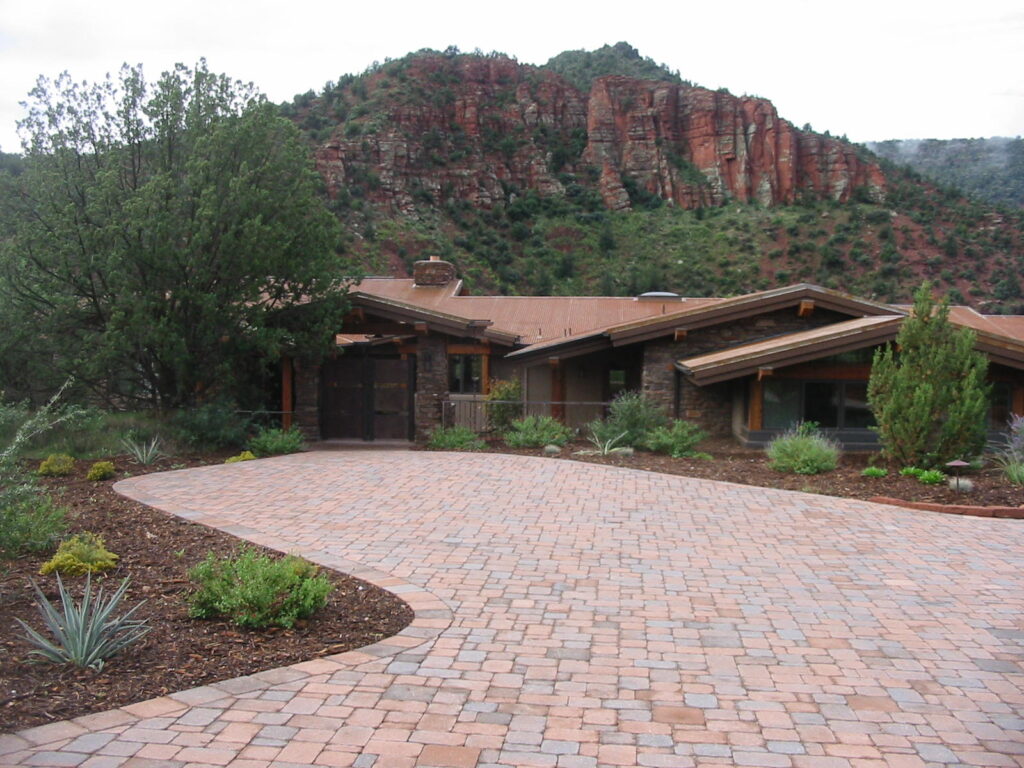
The above landscape falls into the “natural” or “native” category. Native juniper, native Banana Yucca, and non-native Mexican Bush Sage, Autumn Sage, and Russian Sage, along with a mulch ground cover, give it a natural, rustic look without relying solely on native plants.
The Case for Blending Native and Non-Native Species
Rather than striving for a 100% native landscape, the best results come from a thoughtful mix of native and adapted plants suited for USDA Zone 7, Sedona’s hardiness zone. This approach allows us to maintain the aesthetic harmony of the natural environment while ensuring longer bloom periods, a variety of textures, and more refined, manageable growth habits.
Incorporating well-behaved non-natives that mimic the look and feel of native plants can provide softness, color, and year-round appeal—things that many true natives lack when planted in isolation.
Desert Scape vs. Desert Style
Finally, there’s the “desert landscape” style, often characterized by sharp, architectural plants such as cacti, agave, and yucca. While these species are iconic and striking, a garden composed solely of spiky textures can feel stark or even harsh. By mixing these bold forms with softer, flowering shrubs and grasses—many of which are native or adapted—you create a more inviting, balanced landscape that still feels authentically regional.
Final Thoughts
Creating a beautiful, low-water, native-inspired garden in Sedona isn’t about going all-in on native species or avoiding color and softness. It’s about understanding the role native plants can play, how to use them artfully, and when to complement them with well-chosen adapted species.
If you’re dreaming of a garden that seamlessly blends into the Sedona landscape, let’s discuss how to bring that vision to life with an expert design rooted in both ecological understanding and aesthetic beauty.