Now that you have a list of suitable hummingbird-friendly plants that will grow in the Sedona area (USDA Zone 7), the plants you use will depend on basic design principles based on the plant’s form and purpose. If you are looking to create a hummingbird garden, don’t focus solely on which plants to buy; instead, consider the task as a design project for your hummingbird garden. However, before selecting which plants are suitable for your particular space, let’s examine the general form of each shrub. Not all the plants will be ideal for any space within your garden.
If you want your garden not to look like a hodgepodge of plants, you have to spend some time thinking about this basic principle: Select the right plant and put it in the right place.
This means you must understand the growing requirements of the plants, such as their height and width, the type of sunlight they need, and their specific water and soil needs.
Additionally, research and understand the aesthetic characteristics of each plant, including its flower color, texture, size, and form.
Once you have a palette of suitable plants to work with, where do you place them? This is the art and science of planting design, and there is a process that you must go through to achieve a thoughtfully designed hummingbird garden.
The key to a successful hummingbird garden is not to rely solely on plants that have flowers that attract hummingbirds. Use other plants that provide the necessary structure, form, texture, and seasonal interest to your garden. For instance, if you have a 12 x 12 spot that you want to create your hummingbird garden and select all perennials, what will it look like during the winter? A garden in Sedona must be designed with a balance of evergreens and perennials. This balance is key to the placement of the plants.
Start by analyzing your garden, including its various spaces, site conditions (such as the amount of sunlight, slope, soil type, existing structures, and elements you want to retain).
What are the functional elements, such as a sitting area, patios, walkways, focal points, fountains, or fences, that may be included? Laying out the “hard” surfaces will define the areas available for plantings.
Perennial gardens are typically planting beds that are intended to create a flower show. For a hummingbird garden, consider designating a specific spot for this special bed, or it could be a series of beds that border a walkway. You can also locate particular hummingbird plants throughout the garden, so not all the excitement happens in one specific area.
To create interest, place the plants primarily based on their form.
Categorize the forms based on trees, tall shrubs, medium shrubs, low shrubs, ground covers, spiky accents, evergreen vs. deciduous plants, annuals, and perennials. Conceptually, lay out each particular planting area based on the forms, then pay attention to the grouping, the layering, and the massing of the plants.
Vertical layering is the escalation of height from the front to the back of a bed or a vantage point in the garden. Small, low plants are placed up close, and taller, bolder textures are used in the background. Midlevel shrubs go in the middle.
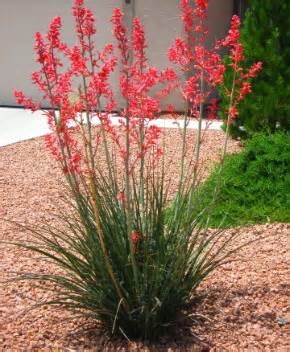
Horizontal layering is the massing of shrubs and the repetition of shrubs to fill a void. It is not a good idea to create horizontal layering with too much variety. Repetition of the same or similarly formed shrubs is best. You can break up the monotony by using vertical accents to break the linearity of the repeated shrub texture and form. I like to do this with spikey accent shrubs, such as Red Hot Poker or Red Yucca. Limiting your plant palette to all hummingbird plants is not a good idea. Use them as accents for when they flower, but not as the primary structure of the garden.
TREES
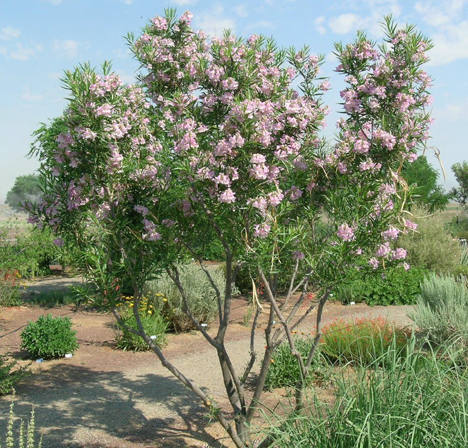
Mimosa (deciduous)
Desert Willow (deciduous)
Vitex (deciduous)
Crape Myrtle (deciduous)
Pomegranate (deciduous)
PERENNIALS
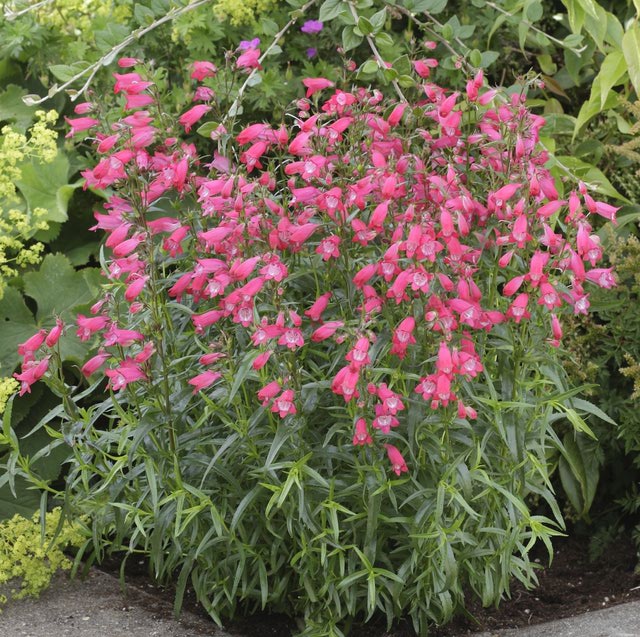
Agastache
Bee balm
Canna lily
Daylily
Delphinium
Flame acanthus
Coral bells
Red columbine
Russian Sage
Penstemon
ANNUALS
Nasturtium
Petunia
EVERGREEN SHRUBS
Autumn Sage
English lavender
Spanish lavender
Red Yucca
VINES
Halls honeysuckle (semi-evergreen)
Coral honeysuckle (semi-evergreen)
Red Trumpet vine (deciduous)
Tangerine Crossvine (semi-evergreen)
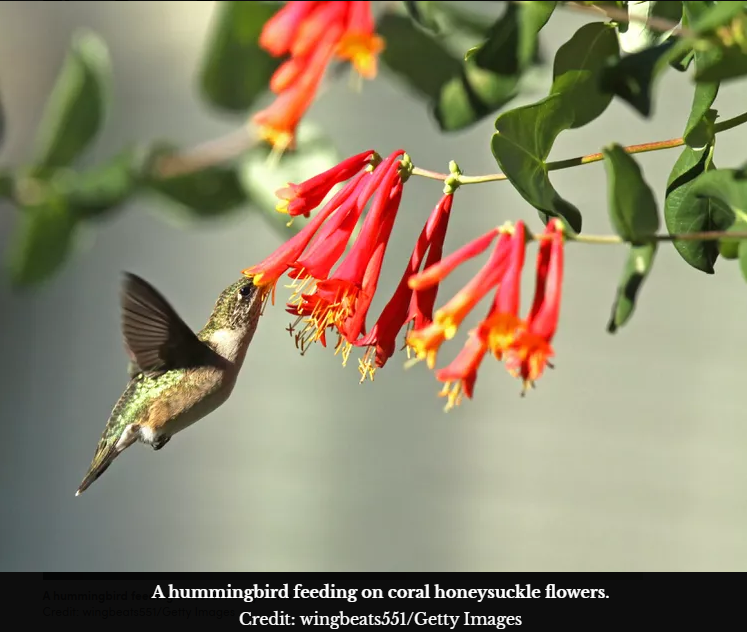
Include feeders in your Hummingbird Garden Design.
Don’t overlook the use of feeders to provide hummingbirds with a food source in addition to the flowers. Not all flowers will be blooming, nor have sufficient nectar. Place the feeders in shade and/or near seating areas to allow for viewing from inside the house. Having more than one feeder will help attract more hummingbirds, for more information about the use of feeders check out the Sedona Hummingbird Society web site.